
Each month, our Curator, Edwin Rutherford, will select an object from the museum’s collections and share the story behind it.
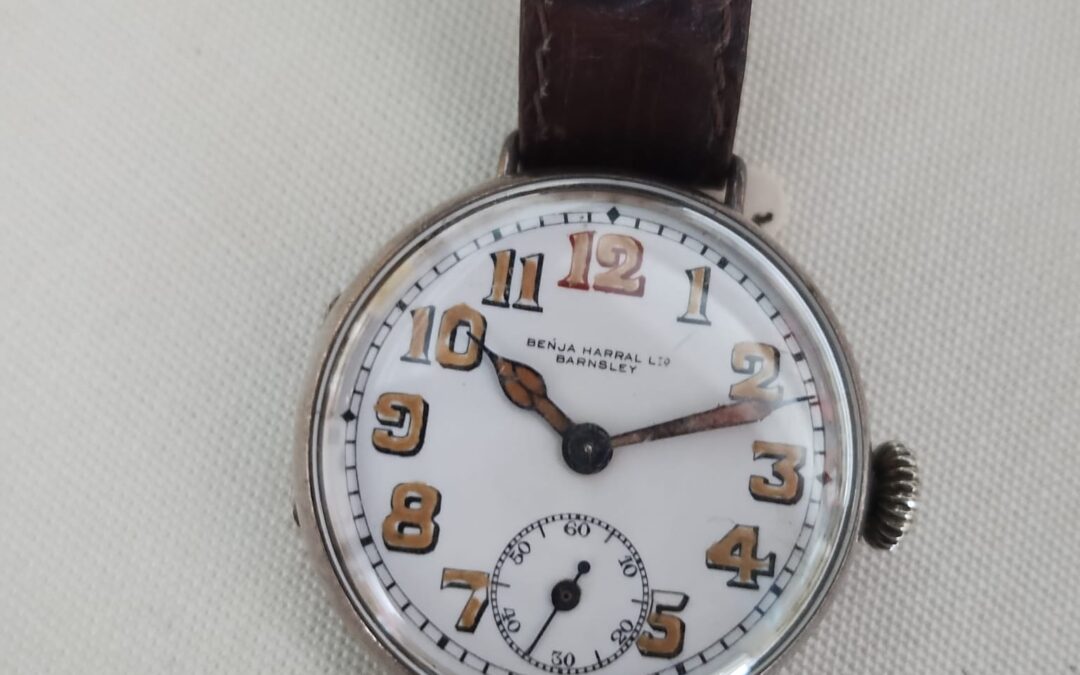
For our first Curator’s Choice, and in recognition of this month’s Remembrance commemorations, Edwin has chosen a First World War British Army Officer’s trench watch.
A truly iconic and poignant personal object from the First World War, this watch offers a glimpse into the role of a British Officer serving on the Western Front.
An Officer’s watch was vitally important. It would have been constantly checked in the build-up to zero hour – the moment when the order was given to advance across No Man’s Land towards enemy trenches.
Can you imagine what it would have been like for the wearer of this watch as time ticked down to zero hour and leading an impending major infantry assault on the German trenches across No Man’s Land.
The reality was often devastating. For instance, on the 1st of July 1916 at the Battle of the Somme, the Lonsdale Battalion of the Border Regiment (recruited by Hugh Cecil Lowther) with men from Carlisle, Penrith, Kendal Whitehaven, and Workington in its ranks, took heavy casualties. The Battalion’s Officers killed in action on this bloody day were Lt-Colonel Machell, Captain Brown, Captain Corbett, Captain Smith, Lieutenant Ruff, 2nd Lieutenant Monkhouse, 2nd Lieutenant Parker, 2nd Lieutenant Coe, 2nd Lieutenant Dunstan and 2nd Lieutenant Storey Paton. Fifteen other Lonsdale Battalion Officers were also wounded.
For a Second Lieutenant, life expectancy during periods of intense trench warfare could be as little as six weeks.
This watch was more than a piece of military equipment. It was a personal possession, worn daily by an officer whose responsibility was to lead others into some of the most dangerous conditions of the war.
A small object with an extraordinary story.
Come and discover more about the stories behind the objects in our collection at The Beacon Museum.
Object details:
British Army Officer’s Trench Watch
Swiss-made, completed by Benjamin Harrel (1876–1971) of Barnsley.
Curator: Edwin Rutherford